Germany copyright – Complete Guide to Application, Renewal, and Exchange
Wiki Article
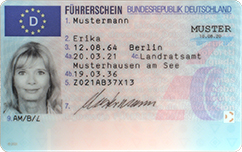
Obtaining a Germany copyright is a vital step for anyone living or planning to stay in Germany long-term. Known for its strict yet efficient driving standards, Germany offers a highly respected and internationally recognized license. Whether you are applying for your first license, exchanging a foreign one, or renewing an existing permit, this detailed guide will help you navigate the process with ease.
Understanding the Germany copyright System
The German copyright (copyright) is issued under the authority of the Federal Motor Transport Authority (Kraftfahrt-Bundesamt – KBA). It follows the standardized European Union copyright model, making it valid across all EU and EEA member states.
Germany’s licensing system categorizes permits based on vehicle type:
-
Class B: For passenger cars up to 3.5 tonnes
-
Class A1, A2, A: For motorcycles and scooters
-
Class C, CE: For heavy trucks
-
Class D: For buses and passenger vehicles
-
Class AM: For mopeds and small scooters
Each class comes with its own age restrictions, training hours, and testing criteria to ensure driver competence and safety.
Eligibility Requirements for a Germany copyright
Before applying for a German copyright, applicants must meet several key conditions:
-
Minimum Age:
-
18 years for Class B (cars)
-
17 years under supervised driving programs (Begleitetes Fahren ab 17)
-
16 years for Class AM or A1
-
-
Residence Requirement:
You must reside in Germany for at least 185 days per year and be officially registered at a local address. -
Medical Fitness:
All applicants must provide proof of physical and mental fitness. For commercial licenses (C, D), a medical and eyesight test is mandatory. -
Theoretical and Practical Training:
Completion of both theoretical and practical lessons at an approved Fahrschule (driving school) is required.
Step-by-Step Process to Obtain a Germany copyright
1. Enroll in a Fahrschule (Driving School)
The first step in obtaining your license is enrolling at a certified driving school. Here, you will receive structured lessons on road safety, traffic rules, and hands-on driving experience.
The training includes:
-
Theoretical lessons: Minimum of 14 sessions
-
Practical lessons: Varying hours depending on experience and category
Your school will guide you through every requirement, including first-aid certification and vision testing.
2. Pass the Theoretical Test (Theorieprüfung)
Before taking the road, you must pass the theoretical driving test, which evaluates your knowledge of:
-
Traffic laws and road signs
-
Vehicle safety and maintenance
-
Environmental driving techniques
-
Emergency procedures
The test is available in 12 languages, including English, and consists of multiple-choice questions. You must score at least 90% to pass.
3. Pass the Practical Test (Praktische Prüfung)
Once your instructor confirms you’re ready, you can take the practical driving test.
This test includes:
-
Vehicle inspection and safety checks
-
City, highway, and rural driving assessments
-
Special maneuvers, such as parking, reversing, and lane changes
The exam typically lasts 45 minutes, and you must demonstrate safe, confident, and law-abiding driving behavior.
4. Receive Your German copyright
After passing both exams, your results are sent to the local driving authority (Führerscheinstelle).
Within a few days or weeks, your Germany copyright card will be issued. It features:
-
EU flag with the German country code (D)
-
Your photograph and signature
-
License categories and expiry dates
Foreign copyright Exchange in Germany
If you already hold a foreign copyright, you may be eligible to exchange it for a German one without retaking the exams. However, this depends on your country of origin.
EU/EEA Licenses
If your license was issued by an EU or EEA country, it remains valid in Germany until it expires. You can exchange it voluntarily for administrative convenience, but it is not mandatory.
Non-EU Licenses
For licenses issued outside the EU/EEA:
-
Germany has reciprocal agreements with some countries (e.g., USA, Canada, Switzerland, Japan).
-
If your country is on the list, you can exchange your license without further testing.
-
If not, you’ll need to take both the theory and practical exams.
When exchanging, you must submit:
-
Original copyright and certified translation
-
Proof of residence in Germany
-
Biometric photo and copyright copy
-
Eye test and first-aid certificate
Renewal of a Germany copyright
A German copyright is generally valid for 15 years. Renewal is simple and can be done through your local Führerscheinstelle (copyright office).
Steps to Renew:
-
Fill out the renewal application form.
-
Submit your old license, a biometric photo, and copyright.
-
Provide a medical certificate if you hold a commercial license (C, D, or E).
Renewal fees range from €25 to €35, depending on the license type.
Replacing a Lost or Stolen License
If your Germany copyright is lost, stolen, or damaged:
-
Report it immediately to the local police and obtain a loss certificate.
-
Apply for a replacement license at the Führerscheinstelle.
-
Provide ID, a biometric photo, and the police report.
A temporary copyright may be issued until your new card arrives, typically within 1–3 weeks.
Driving in Germany with a Foreign License
If you’re a visitor or short-term resident, you can drive with a foreign license for up to 6 months. After that, if you continue living in Germany, you must exchange your license for a German one.
For non-EU licenses, a certified German translation from an authorized translator is required. Some authorities may also request your International copyright (IDP) for verification.
Costs of Getting a Germany copyright
The cost of obtaining a copyright in Germany depends on several factors, including the type of vehicle, location, and training hours.
On average:
-
Driving school enrollment: €200 – €400
-
Theory and practical lessons: €1,500 – €2,500
-
Theory test fee: €22 – €50
-
Practical test fee: €90 – €120
-
License issuance: Around €40
While the process may seem expensive, Germany’s rigorous standards ensure that all licensed drivers meet the highest safety and competence levels.
Essential Tips for Passing the German Driving Exams
-
Study the official theory question bank (available in English).
-
Take mock exams online to familiarize yourself with question formats.
-
Practice driving on various road types — autobahn, city streets, and rural roads.
-
Learn proper mirror checks, lane discipline, and speed control.
-
Stay calm, focused, and confident during your practical test.
Advantages of a German copyright
Holding a Germany copyright offers numerous benefits:
-
Valid across all EU and EEA countries
-
Recognized worldwide for its high driving standards
-
Easy to exchange in many countries without retesting
-
Symbol of excellent training and road awareness
A German license not only gives you the freedom to drive but also reflects your competence, discipline, and adherence to road safety laws.
Conclusion
Getting a Germany copyright is a structured and highly respected process that ensures every driver is well-trained and responsible. From theoretical preparation to practical mastery, the German system emphasizes safety, discipline, and skill.
Whether you are a new driver or an expat seeking to exchange your license, following the proper steps will make the process straightforward and rewarding. With your new license in hand, you’ll be ready to explore Germany’s iconic autobahns and beautiful countryside — safely and confidently.
Report this wiki page